
When AI Outperforms Emergency Doctors: What OpenAI's 67% Score Really Reveals
OpenAI's o1 model outperforms emergency physicians in diagnosis. Beyond the headlines, what does this performance really tell us about LLMs in healthcare?
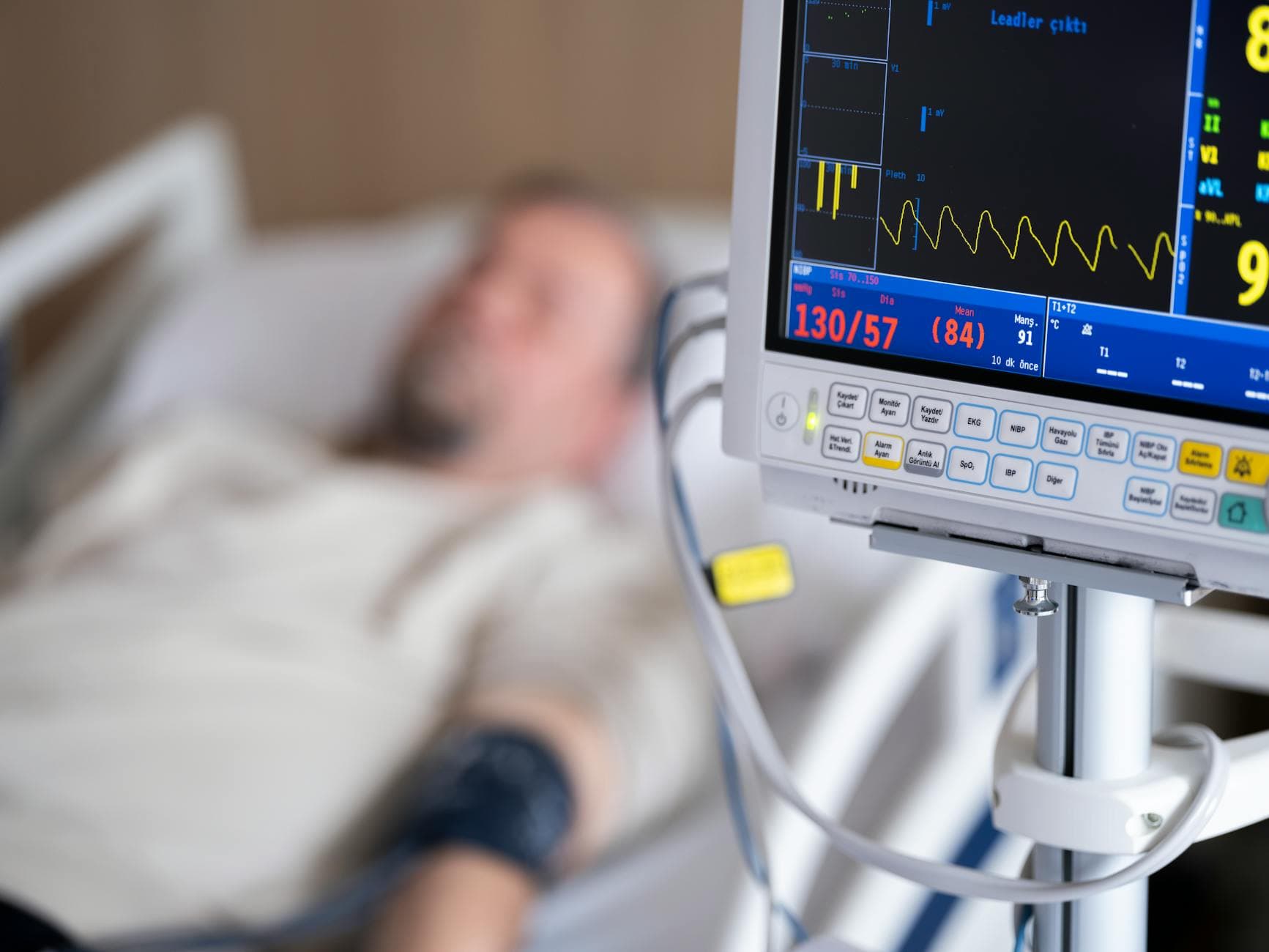
A figure has been making the rounds in specialized media in recent weeks: OpenAI's o1 model achieves 67% accuracy in emergency diagnosis, compared to 50-55% for human doctors. The kind of result that immediately triggers two opposite reactions: unbridled enthusiasm from tech enthusiasts and instinctive skepticism from frontline practitioners.
Yet this dichotomy masks what really matters. Because behind this benchmark lies a far more nuanced question: what are we actually measuring when it comes to LLM diagnostic medical accuracy ER? And more importantly, what can we do with it in a context where every second counts and mistakes come at a steep price?
Raw LLM healthcare performance tells only part of the story
Let's compare what is actually comparable. The 50-55% accuracy of emergency physicians reflects real working conditions: multiple patients simultaneously, incomplete or contradictory information, extreme time pressure, fatigue accumulated after a 12-hour shift. The emergency room doctor doesn't diagnose in a vacuum—they prioritize, arbitrate, decide with what they have at hand.
The o1 model, meanwhile, was evaluated on standardized cases with structured, complete data. No aggressive patient yelling while you examine the next one. No illegible medical file hastily scribbled by an overwhelmed colleague. No uncertainty about the reliability of symptoms reported by a patient in shock.
This difference in context doesn't disqualify the technical performance—it grounds it in the reality of clinical validation. You don't compare a race car on a closed circuit to an emergency vehicle on an icy road. Both have their uses, but in radically different environments.
The study actually reveals something fundamental about how LLMs process medical information. Faced with a set of symptoms, the model excels at identifying statistical patterns, at making complex correlations that the human mind struggles to hold in working memory. It doesn't get tired, doesn't suffer from cognitive biases related to stress, doesn't jump to conclusions through overconfidence.
What AI diagnosis does better, and what it never will
Take a concrete case: a 45-year-old patient presents with chest pain, slight dyspnea, and a family history of heart disease. The o1 model will instantly cross-reference these elements with thousands of similar cases, identify relevant differential diagnoses, assess the relative probability of each hypothesis. It does this in seconds, with an exhaustiveness no practitioner can achieve without support.
But here's what the model misses: the quality of pain the patient describes while searching for words, the evasive gaze that betrays hidden information (drug use, self-medication), the sudden pallor that precedes vasovagal syncope, the hand that imperceptibly tenses when you palpate a specific area. These subtle, non-verbal, contextual signals nonetheless constitute a significant part of emergency diagnosis.
We're touching on a fundamental limitation of LLMs in critical medicine: they excel with structured data, they still struggle with embodied clinical observation. An experienced emergency physician develops intuition that aggregates thousands of imperceptible cues. This tacit expertise remains beyond the reach of current models—not from technical deficiency, but because it rests on physical presence and human interaction that AI cannot simulate.
This doesn't mean AI is useless in emergency settings. It means it excels in a specific role: that of cognitive assistant that compensates for the blind spots of human cognition under pressure. When an overworked practitioner risks missing a rare but serious pathology, the model can suggest: "Have you considered aortic dissection? The symptoms match 73% of documented cases."
Ethical and operational challenges in production deployment
Now imagine we decide to deploy this type of model in emergency departments. Questions come flooding in. Who is responsible in case of error? If the doctor follows the AI recommendation and is wrong, is it medical malpractice? If conversely they ignore a relevant system alert, do they expose themselves to liability?
Current legal frameworks aren't prepared for these hybrid situations. The concept of medical decision-making rests on the autonomy and individual responsibility of the practitioner. Introducing a decision-support system that significantly influences clinical choices disrupts this balance. As we explored when migrating an LLM architecture to production, you can't simply overlay an AI model onto an existing workflow and hope everything works out.
There's also the question of explainability. A doctor who makes a diagnosis must be able to justify their reasoning. With current LLMs, even sophisticated ones like o1, you get at best approximations of that reasoning. The model doesn't "think" like a human; it calculates probabilities on linguistic patterns. This relative opacity is problematic in a context where traceability of decisions is crucial, particularly for quality audits or medicolegal assessments.
Finally, we must consider psychological and organizational impact. Studies in aviation have shown that introducing high-performing automated systems sometimes leads to degradation of pilots' manual skills, as they over-delegate to the system. In emergency medicine, this risk exists: practitioners who rely too heavily on AI could lose autonomous diagnostic acuity, creating problematic dependency.
Toward augmented collaboration rather than replacement
The real opportunity doesn't lie in the fantasy of AI replacing emergency physicians. It lies in an intelligent redefinition of roles, where machine and human each bring what they do best. A human-in-the-loop approach allows precisely supervising AI without limiting its potential.
We can imagine a three-stage system. First, AI-assisted initial triage: the model analyzes reported symptoms and vital signs to establish an urgency level and suggest diagnostic leads. Next, clinical examination by the physician, who validates or invalidates these hypotheses through direct observation and thorough history-taking. Finally, cross-review where the practitioner compares their diagnosis with system suggestions, particularly on complex or atypical cases.
This hybrid approach maximizes the strengths of each party. AI compensates for cognitive load and fatigue, ensures an exhaustiveness humans cannot sustain. The physician brings clinical judgment, adaptation to the patient's particular context, the ability to manage uncertainty and make urgent decisions despite incomplete information.
Several emergency departments in the United States and United Kingdom are already experimenting with less sophisticated versions of this approach. Field feedback is encouraging on one specific point: reduced diagnostic errors on rare but serious pathologies. The system doesn't replace expertise—it expands the practitioner's field of attention.
But this collaboration imposes strict conditions. Training of medical teams in critical use of AI, user interfaces adapted to emergency pace (no complex data entry when every second matters), continuous validation of the model on real cases to prevent performance drift, feedback mechanisms so system errors are documented and corrected.
What the o1 benchmark really reveals about clinical validation
Ultimately, o1's performance tells us three important things. First, that LLMs have reached sufficient maturity to handle complex cognitive tasks in healthcare, provided we properly define their scope of application. Second, that emergency medicine, despite its apparent complexity, contains a significant share of pattern recognition that AI can learn. Third, that we still don't measure very well what actually makes a diagnosis valuable in an emergency situation.
Because 67% accuracy is good. But on which cases? With what biases in training data selection? With what distribution of pathologies? A model can excel on common cases and fail miserably on atypical presentations—which are precisely where human expertise makes all the difference.
The question therefore is not whether AI will replace emergency physicians. It's how to build systems that genuinely augment their capabilities without creating new vulnerabilities. How to validate these tools in real conditions, with all the complexity and chaos of an emergency department on a Saturday night. How to train practitioners in effective collaboration with these digital assistants, drawing in particular from lessons learned about ROI from other LLMs in production.
Enthusiasm is legitimate in the face of technical progress. But the leap from laboratory to bedside demands a rigor and caution that sensational announcements of record-breaking figures must not obscure. Between the model that works under controlled conditions and the reliable tool in critical situations, there lies a gap that only a methodical, iterative approach deeply rooted in real-world realities will allow us to bridge.
```Frequently Asked Questions
What is the accuracy rate of OpenAI o1 in emergency diagnosis?▼
OpenAI's o1 model achieves 67% accuracy in emergency diagnosis, outperforming human emergency physicians on certain clinical cases. This score reveals LLMs' ability to process complex medical information, but doesn't indicate absolute superiority in real-world situations.
Can LLMs Replace Emergency Medicine Physicians?▼
No. While models like o1 demonstrate high diagnostic performance, they cannot replace emergency physicians because they lack critical capabilities: direct physical examination, real-time adaptation to complications, and legal accountability. They function best as a decision support tool.
Why do LLMs perform well in medical diagnostics?▼
LLMs perform well in medical diagnostics because they can quickly analyze large volumes of textual data and medical literature. Their strength lies in correlating symptoms and recognizing patterns, but they operate without genuine contextual understanding of the patient.
What are the risks of using AI for emergency department diagnosis?▼
The main risks include algorithmic bias stemming from training data, unclear legal accountability, and insufficient understanding of nuanced clinical context. An incorrect AI diagnosis can delay critical treatment if the physician relies too heavily on the model.
How can I integrate LLMs securely into emergency services?▼
Secure integration requires: rigorous clinical validation before deployment, use as a decision support tool rather than a replacement, complete traceability of AI recommendations, and adequate medical training on the limitations of these systems. The physician remains ultimately responsible for the decision.
Related Articles
Microsoft Flint: Finally a Language to Understand What Your AI Agents Actually Do
When AI agents chain dozens of calls to accomplish a task, how do you pinpoint where things break down? Microsoft is offering an answer with Flint, a dedicated language for visualizing and debugging autonomous workflows.
AI Agents in Production: The Hidden Problems and Limitations Nobody Tells You About
LLM agents promise autonomy. In production, they reveal limitations and hidden issues far more subtle than benchmarks suggest.
LLM Evaluation: Funnel vs Fork Method to Optimize Your Tests
Most teams test their models in parallel. A sequential, funnel-based approach would be a game-changer.