
MegaTrain: Training a 100B+ Parameter LLM on a Single GPU
A technical breakthrough that democratizes fine-tuning of large language models and reshapes the AI landscape in enterprises through revolutionary GPU memory optimization.
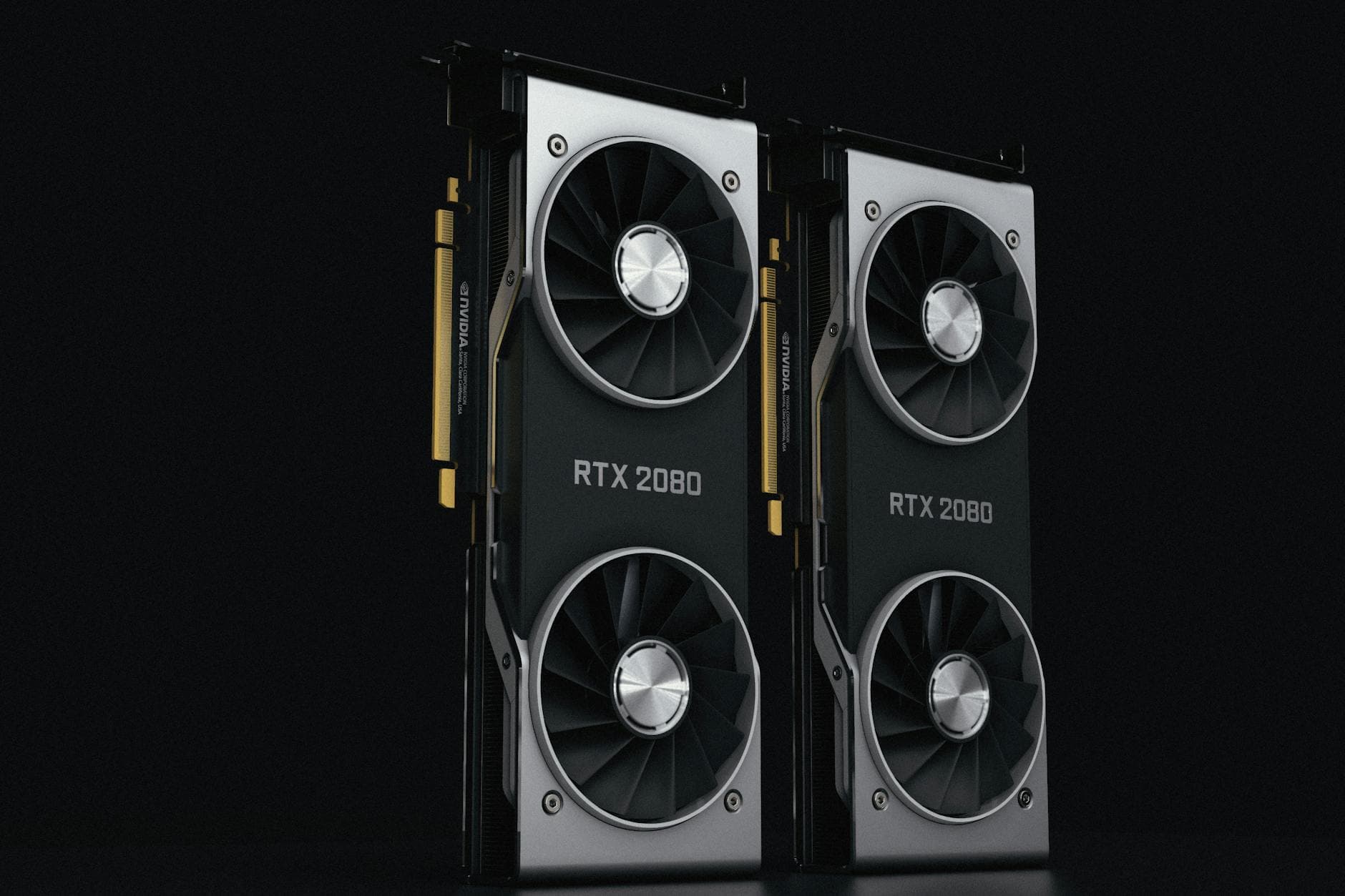
Until now, training a 100B+ parameter LLM on a single GPU was a privilege reserved for tech giants. Meta, OpenAI, Google have access to GPU farms connected by prohibitively expensive network infrastructure. The rest of the world had to settle for pre-trained models, sometimes ill-suited to specific business needs. This reality is shifting with the emergence of MegaTrain, a technical approach that makes it possible to train these behemoths in full precision training on a single graphics card.
This isn't about aggressive quantization or compromising model quality. MegaTrain tackles the problem at its root by rethinking how computations are orchestrated in memory. This breakthrough isn't just an engineering feat: it potentially redistributes access to effective LLM fine-tuning and opens concrete perspectives for companies looking to adapt these models to their areas of expertise.
The GPU memory optimization bottleneck
Understanding MegaTrain's achievement requires going back to basics. Training a neural network involves three components in memory: the model parameters themselves, the gradients computed during backpropagation, and the internal states of the optimizer (typically Adam, which maintains moving averages). For a 100 billion parameter model in full precision (float32), you quickly reach 400 GB just for the weights, before even counting gradients and intermediate activations.
An NVIDIA A100, considered the current standard for training, packs 80 GB of memory. The gap is staggering. Classical solutions rely on parallelism: splitting the model across multiple GPUs (model parallelism), replicating computations across different machines (data parallelism), or offloading certain data to CPU (offloading). Each approach introduces network latency, complicates infrastructure, and dramatically increases costs.
MegaTrain offers a different path. Rather than distributing spatially, the algorithm plays on the temporal dimension. It breaks down training into sequential micro-steps that never load the entire model into memory simultaneously. This meticulous choreography of transfers between RAM and fast storage (NVMe) keeps the GPU constantly fed with computations, while maintaining memory footprint below the critical threshold.
Surgical resource orchestration
The key to MegaTrain lies in its ability to anticipate data needs. The algorithm analyzes the neural network's computation graph to identify precisely which parameters will be needed at what moment. While one network layer performs its computations, the next ones are already being loaded from the SSD. This asynchronous prefetch almost entirely masks storage latency.
The teams that developed this approach also optimized the management of activations—those intermediate values preserved during the forward pass for gradient computation. Rather than storing everything, MegaTrain selectively recalculates certain activations on demand (a technique called gradient checkpointing), prioritizing those whose recalculation cost is low compared to their memory footprint.
The result is counterintuitive: you can train in full precision on a single GPU while accepting moderate slowdown compared to a cluster. Early measurements show a 3 to 5x factor depending on model size, which remains entirely acceptable when the alternative is not being able to train at all without investing hundreds of thousands of euros in infrastructure.
Concrete implications for LLM fine-tuning in enterprise
This technical breakthrough arrives at a moment when organizations are realizing that general-purpose models, however powerful, don't always meet business requirements. An LLM pre-trained on the web doesn't master the technical vocabulary of a specific industrial sector, nor the regulatory nuances of a medical or financial domain. Fine-tuning becomes essential.
Until now, this adaptation required either turning to specialized service providers (raising confidentiality concerns) or investing in substantial GPU infrastructure. MegaTrain changes the economic equation. A small business can now contemplate fine-tuning a 100 billion parameter model with a server equipped with an A100 or H100—an investment of tens of thousands of euros instead of hundreds of thousands.
We're already seeing emerging use cases. Law firms fine-tuning models on their internal case law corpus. Pharmaceutical laboratories adapting LLMs to their molecular nomenclature. Academic research teams that can finally experiment with large-scale architectures without depending on compute budgets beyond their reach.
Quality remains central. Training on a single GPU with MegaTrain doesn't mean you get the same results as a massive cluster with gigantic datasets. Training corpus size, data quality, and hyperparameter relevance remain determinative. But you gain the ability to iterate quickly, test hypotheses, adjust a model on proprietary data without outsourcing. To go further on moving to production, discover how to reliably migrate your LLM architecture to production.
Technical challenges that remain
MegaTrain isn't a universal solution. The approach works particularly well for fine-tuning, where you start from an already pre-trained model and adjust over relatively limited iterations. For full from-scratch pre-training, the slowdown becomes more problematic. Training that would take a few days on a cluster could stretch over several weeks on a single GPU, even with MegaTrain.
Dependence on fast NVMe storage is also a factor to consider. Performance collapses if the SSD can't keep up with transfer rates. We're talking about sustained throughputs of several GB/s, requiring recent, quality hardware. Cooling infrastructure matters too: running a GPU at full capacity for days demands rigorous thermal management.
From a software perspective, integrating MegaTrain into existing pipelines still requires work. Standard frameworks like PyTorch or JAX don't natively support this advanced memory orchestration. Teams must either adapt their code or wait for these optimizations to surface in mainstream libraries. We're still in the maturation phase, though early open source tools are starting to appear.
A redistribution of AI's cards
Beyond technical aspects, MegaTrain fits into a broader movement toward AI democratization. For years, the race toward ever-larger models has widened the gap between actors with computational resources and others. This concentration of capacity raised questions about fairness and diversity in AI development.
Lowering the material barrier opens doors to more players. Universities in emerging countries can contribute to the state of the art. Startups can experiment without raising millions to fund compute infrastructure. Companies can maintain control of their models and data without depending on external APIs. This autonomy becomes a significant argument, as shown by optimizing compute costs in data pipelines.
This dynamic won't make massive GPU clusters disappear. For some use cases, scale remains essential. But it sketches a landscape where multiple strategies coexist: giants pushing boundaries with ever-larger models, and a distributed ecosystem of actors adapting, specializing, and fine-tuning these models for specific needs.
The coming months will be decisive. If MegaTrain lives up to its promises in real conditions and tooling matures, we could see significant adoption wave. Companies hesitating to invest in fine-tuning due to lack of means could take the plunge. Data science teams would gain autonomy. Fine-tuning would shift from a reserved option for the well-resourced to standard practice.
Whether this approach will inspire other innovations in memory optimization remains to be seen. Model architectures are evolving, GPUs too. MegaTrain shows that considerable room for maneuver still exists when you rethink computational orchestration rather than simply add hardware. Perhaps that's the most valuable lesson: algorithmic ingenuity can, in some cases, compensate for material shortfalls. A lesson that resonates particularly strongly in an era when the race for raw power is hitting economic and environmental limits.
Frequently Asked Questions
How to train a 100 billion parameter language model on a single GPU?▼
MegaTrain uses revolutionary memory optimization that compresses the memory footprint of large models, enabling training of 100B+ LLMs on a single GPU. This technique combines dynamic activation reduction with intelligent gradient management, eliminating the need for expensive GPU clusters for fine-tuning.
What is the difference between fine-tuning and pre-training on a single GPU?▼
Fine-tuning adapts a pre-trained model to a specific task using less data and computational power, whereas pre-training builds the model from scratch. MegaTrain makes fine-tuning very large models accessible on standard hardware, but it doesn't replace the initial pre-training phase, which remains highly resource-intensive.
What are the advantages of training an LLM on a single GPU for businesses?▼
This drastically reduces infrastructure costs, accelerates time-to-market for AI projects, and enables small and medium-sized businesses to fine-tune models for their specific use cases. Technical accessibility also eliminates dependency on cloud teams and external providers.
How much GPU memory is required to train a 100B parameter model with MegaTrain?▼
MegaTrain reduces requirements to a single high-end GPU (such as an A100 or H100 with 40-80GB VRAM), compared to multiple GPUs or TPUs in traditional approaches. The technique optimizes dynamic memory allocation for intermediate activations and gradients, freeing up space for the model itself.
Does MegaTrain affect the quality or speed of LLM training?▼
MegaTrain maintains the final model quality since it doesn't alter the backpropagation algorithm, only memory usage. Training speed is comparable to or slightly faster than distributed approaches thanks to reduced network latency between GPUs.
Related Articles

AI Agents in Production: The Hidden Problems and Limitations Nobody Tells You About
LLM agents promise autonomy. In production, they reveal limitations and hidden issues far more subtle than benchmarks suggest.
LLM Evaluation: Funnel vs Fork Method to Optimize Your Tests
Most teams test their models in parallel. A sequential, funnel-based approach would be a game-changer.

AI Agents Transform Data Pipelines: When Automation Becomes Truly Autonomous
Netflix and Databricks are betting on AI agents to orchestrate their agentic data pipelines. A fundamental shift that's reshaping the game for autonomous automation.