
Sweets Vault: When a Multimodal AI Agent Controls Physical Hardware
Building an intelligent agent that interacts with the real world, from concept to production with Gemini: architecture, challenges, and practical solutions.
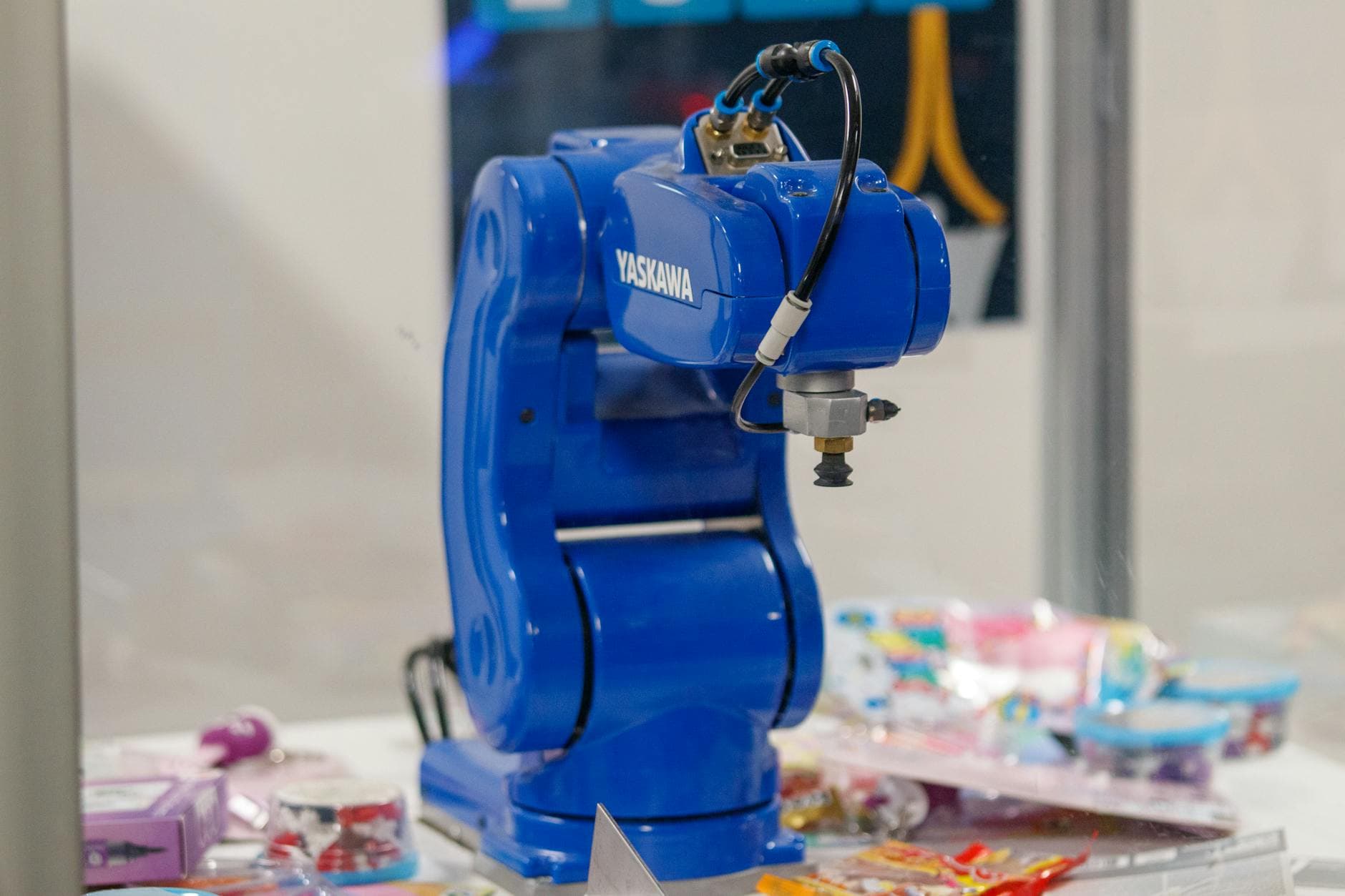
We hear a lot about generative artificial intelligence and multimodal models capable of understanding text, images, and sound. But there's a significant gap between an impressive chatbot demo and a system that actually controls physical hardware. The Sweets Vault project explores precisely this frontier: how to build a multimodal AI agent based on Gemini that doesn't just answer questions, but pilots concrete mechanisms, makes real-time decisions, and interfaces with physical automation workflows?
This type of project reveals the real challenges of integrating AI in professional environments. It's no longer just about well-crafted prompts, but designing a robust architecture where artificial intelligence, hardware, and business logic coordinate reliably. An approach that connects to the challenges discussed in our analysis on how to migrate an LLM architecture to production.
The architecture of a multimodal agent: beyond the prompt
Building an agent that interacts with the physical world requires a three-layer approach. The first layer is the brain: Gemini, with its ability to process text, images, and potentially sound simultaneously. This multimodality fundamentally changes the game. Rather than chaining together multiple specialized models, you have a unified system capable of understanding rich context.
The second layer is orchestration. An AI model, however powerful, remains fundamentally stateless. It generates a response, then forgets it. To build an agent that maintains state, remembers previous actions, and can trigger complex sequences, you need an orchestration layer. This is where automation platforms and low-code workflows come in. They ensure state persistence, handle errors, orchestrate API calls, and coordinate the different system components.
The third layer, often overlooked in POCs, is the interface with hardware. Activating an electronic lock, reading a sensor, controlling a motor: these operations involve specific protocols, precise timing, and rigorous error management. You can't just send a command and hope it works. You need to manage timeouts, inconsistent states, and temporary hardware failures.
From AI decision to physical action: managing the responsibility chain
Let's take a concrete example with Sweets Vault. Imagine a system that controls access to an automated candy dispenser, with visual recognition to identify the user and verify their access rights. The complete sequence involves several critical steps.
First, capture and analysis. A camera takes a photo, Gemini analyzes the image to identify the person and understand their intent. But this analysis is just a first step. The model can make mistakes, lighting can be poor, the image can be blurry. You can't blindly trust a single inference.
Then comes validation. Before triggering anything, you need to cross-reference this analysis with other data: Is the user properly registered? Do they have available credits? Is the system in a consistent state to handle this request? This business validation layer is absolutely critical. It's what transforms an AI suggestion into an actionable decision, a principle found in our approach to human-in-the-loop for supervising AI.
Finally, physical execution. Once the decision is validated, you trigger the action: unlock the dispenser, distribute a candy, update counters. This phase requires precise state management. What happens if the lock doesn't respond? If the motor jams? If the user cancels the operation midway? Every scenario needs to be anticipated and handled properly.
Automation workflows as the backbone
This is exactly where modern automation platforms prove their value. Rather than hard-coding all this logic, you can build visual workflows that orchestrate the entire chain. A typical Sweets Vault workflow might look like this: trigger on event (presence detection), call the Gemini API with the captured image, process the JSON response, validate against the user database, attempt hardware action with automatic retry on failure, logging and notification.
The advantage of this approach is maintainability. When you want to add a new business rule or modify system behavior, you don't dive into code. You adjust the workflow. When you need to debug a problem, you have a visual trace of execution, step by step. When you want to monitor system health, you connect observability tools to workflow events.
Common pitfalls and how to avoid them
Building a system like Sweets Vault quickly exposes you to several recurring pitfalls. The first is latency. From the moment a user appears until the system reacts, several seconds can pass: image capture, upload to the API, model inference, validation, hardware action. Every millisecond counts for user experience. You can't afford to wait 10 seconds before something happens.
The solution lies in optimization at every level. Use lightweight models when sufficient, cache frequent results, parallelize independent operations, preload user data as soon as presence is detected. The architecture must be designed for responsiveness from the start, not optimized after the fact.
The second pitfall is reliability. A system that interacts with physical hardware must handle the unpredictable. The network can be slow or unstable. Hardware can fail. The Gemini API can be temporarily unavailable or return an error. Each of these scenarios needs a defined management strategy. Retry with exponential backoff? Fallback to a degraded mode? Immediate administrator notification?
The third pitfall, often underestimated, is data governance. A multimodal system processes images, potentially videos, personal data. GDPR regulations apply fully. You must be able to justify why you're capturing this data, how long you keep it, who has access to it, how you secure it. This dimension isn't a constraint added after the fact—it structures the architecture from the design phase, as with any modern data strategy.
Lessons for industrial automation
Beyond the playful aspect of an intelligent candy dispenser, Sweets Vault embodies a fundamental trend: integrating multimodal AI into concrete business processes. You find the same patterns in much more critical industrial contexts: visual quality control on production lines, predictive maintenance with thermal image analysis, collaborative robotics with visual context understanding.
What fundamentally changes with multimodal models like Gemini is the granularity of understanding. Where you previously had to segment the problem (one model to detect, another to classify, a third to extract text), you can now ask the model to understand the scene as a whole and directly extract relevant information from it. This considerably simplifies pipelines and reduces failure points.
But this simplification shouldn't mask integration complexity. You're moving from a traditional ML stack to a hybrid architecture where AI becomes one component among others in a larger system. The required skills evolve: you need to master AI APIs, automation workflows, hardware protocols, and business logic simultaneously. This is a profile that remains rare, at the intersection of software development, systems engineering, and data science.
Toward autonomous agents in the physical world
Sweets Vault is just a first step. You can easily imagine further developments: an agent that learns user preferences, adjusts its recommendations in real-time, negotiates with the user ("There's dark chocolate left, but I know you prefer milk chocolate—would you like me to notify you when it's back in stock?").
This capacity for natural interaction, combined with physical actuation, opens considerable possibilities. You move beyond the purely digital framework of AI into intelligent automation. Factories, warehouses, smart buildings, autonomous vehicles: all these environments can benefit from agents capable of understanding their visual and acoustic context, making decisions, and acting accordingly.
The challenge is no longer technological in the strict sense. The building blocks exist: performant multimodal models, mature automation platforms, affordable connected hardware. The challenge lies in orchestrating these components to create reliable, maintainable, and scalable systems. This is precisely the type of integration that companies must master to realize the promises of generative AI beyond marketing demos. Agents won't remain confined to our screens: they're about to act in the physical world, and we need to prepare for it seriously.
Frequently Asked Questions
How can I integrate multimodal AI with physical hardware?▼
Integrating a multimodal AI with physical hardware relies on a three-layer architecture: an AI agent that processes images and text commands, a REST or MQTT API that communicates with devices, and sensors that report system status. Gemini enables simultaneous processing of visual data (cameras) and contextual information to make real-time decisions on physical automation.
What are the major challenges in building an AI agent powered by hardware?▼
The three main challenges are synchronization between AI orders and physical execution (network latency, timeouts), robustness against hardware failures (faulty sensors, jammed mechanisms), and security (preventing dangerous or unauthorized commands). One solution is to implement feedback loops with visual validation and safety thresholds before each action.
How can Gemini see and understand what's happening in a physical system?▼
Gemini leverages its multimodal capabilities to analyze video streams or images captured by cameras connected to the system. The agent can then describe the observed physical state, compare it with the expected state, and adjust commands accordingly. This perception-action-correction loop enables intelligent and adaptive automation.
What are the recommended programming languages and protocols for controlling hardware with AI?▼
MQTT and REST protocols are the most common for establishing bidirectional communication between the AI agent and hardware. Python is the preferred choice on the backend side for orchestrating Gemini API calls and controlling devices. For the hardware itself, microcontrollers like Arduino or systems such as Raspberry Pi integrate these communication interfaces seamlessly.
How do I deploy an AI agent controlling physical hardware to production?▼
Production deployment requires: a monitoring architecture with real-time alerts on physical failures, exhaustive security testing (what happens if the AI sends contradictory commands?), and a manual fallback to enable rapid intervention. You also need to instrument the system with detailed logging and plan for a degraded mode where the AI only executes actions validated by a human operator.