
From Rear-View Mirror to Radar: Moving from Static Reporting to Predictive Analytics
Reporting shows what happened. Predictive analytics reveals what's coming. A difference that changes everything for decision-makers.
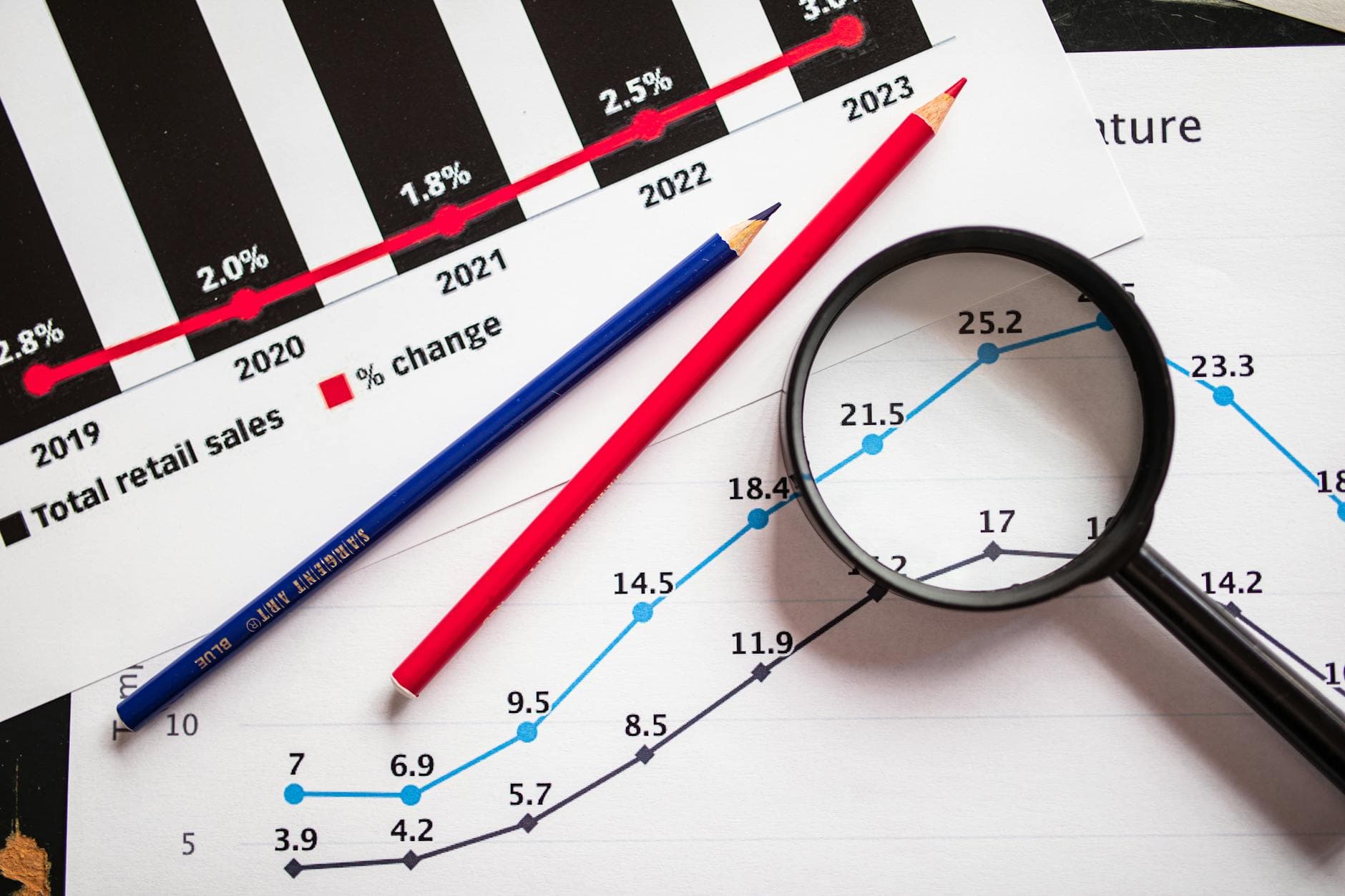
Every Monday morning, the same scene plays out in thousands of companies. Teams gather around dashboards displaying the previous week's performance. Revenue, conversion rates, operating costs. Some curves trending up, others trending down. Commentary, analysis, justification. Then on to the next thing, until the following Monday.
This ritual is reassuring. It creates the illusion of control. Yet it rests on a major blind spot: it looks in the rearview mirror. When you spot a performance dip in your metrics, it's already too late to prevent it. You're simply measuring the consequences of decisions made weeks, sometimes months ago.
The question is no longer what happened, but what will happen. This is where moving from static reporting to predictive analytics changes the game. Not by replacing reporting, but by transforming how organizations anticipate, decide, and act.
Traditional reporting has hit its limits
Static reporting serves an essential function: it measures, tracks, and documents. Without it, there's no way to manage operations rigorously. But as markets accelerate and competition intensifies, this approach reveals its cracks.
Take the example of a distributor noticing a gradual erosion in their repeat purchase rate. Monthly dashboards flag the issue with a three-week lag. By the time they analyze root causes and implement corrective measures, two months have passed. In the meantime, hundreds of customers have switched to competitors.
The problem isn't data quality or indicator reliability. It's the very nature of reporting: it observes, it doesn't warn. It's like driving while only looking in the rearview mirror. You see perfectly where you've been, but you can't anticipate the curve ahead.
This limitation becomes critical when decision cycles shorten. In retail, e-commerce, finance, or supply chain, waiting until month-end to adjust strategy amounts to flying blind. To understand the impact of this shift, discover how data transforms strategic decisions at the highest level. Organizations that win are no longer those that best analyze the past, but those that best anticipate the future.
Predictive analytics: anticipating rather than observing
Predictive analytics rests on a simple principle: use historical data to identify patterns and project future trends. Where reporting describes what happened, predictive analytics estimates what will happen, with a measurable confidence level.
In practice, this means that instead of discovering your sales dropped last week, you're alerted three weeks in advance to a likely demand decline. You no longer experience events—you anticipate them. And that time window changes everything.
One of the most compelling use cases concerns customer churn. A SaaS company generates thousands of data points about platform usage: login frequency, features used, support tickets opened, transaction volume trends. Taken individually, these signals reveal little. Analyzed together and compared against historical behavior of departed customers, they expose precursor patterns.
The result: the customer success team can intervene strategically with at-risk accounts before they cancel their subscription. Not by bombarding everyone with generic emails, but by acting surgically on the right levers at the right time. ROI is measured in retention points gained and revenue preserved.
Another example from supply chain: anticipating stockouts or overstock situations. Predictive models combine sales history, seasonality, promotional events, supplier lead times, and even weather data to forecast future demand with precision. No more seat-of-the-pants trade-offs between stockout risk and inventory carrying costs.
But beware: predictive analytics isn't magic. It doesn't divine the future—it calculates probabilities. That nuance is essential. A well-built predictive model reduces uncertainty and guides decisions. It doesn't replace them.
Conditions for successful transition
Moving from static reporting to predictive analytics isn't just about adding a machine learning tool to your tech stack. It's fundamentally an organizational and cultural transformation built on several pillars.
First, data quality and governance. A predictive model is only relevant if the data feeding it is reliable, complete, and structured. Many organizations discover at this stage that their data is fragmented, inconsistent, or poorly documented. Accurate predictions are impossible in these conditions. Data governance then becomes a prerequisite: define common standards, trace data lineage, document business rules, automate quality controls. To deepen this critical topic, consult our analysis on metadata as the cornerstone of modern data strategy.
Next, accept that transition is gradual. You don't shift overnight from 100% descriptive to 100% predictive mode. The two coexist, and that's normal. Reporting remains necessary to measure performance, validate hypotheses, and feed models. Predictive analytics complements it rather than replacing it. Early implementations should target high-value use cases with limited scope and clear success metrics.
The human dimension is equally critical. Business teams must understand how predictive models work—not in technical detail, but in logic. What is a prediction? What's its margin of error? How do you interpret it? If users don't trust predictions or don't know how to leverage them, they'll remain unused. This requires training, education, and above all regular feedback loops. Models must be challenged, adjusted, and continuously improved based on field insights.
Finally, accept that predictive analytics changes decision-making processes. When a dashboard shows established reality, discussion focuses on interpretation and corrective action. When a predictive model estimates a future scenario with 75% probability, the nature of discussion shifts. Should we act now or wait for more certainty? What level of risk do we accept? This evolution requires sufficient managerial maturity and data culture to embrace the inherent uncertainty of any prediction.
ROI and strategic impact: measuring value created
The return on investment question comes up quickly. Migrating to predictive analytics represents significant effort: technical infrastructure, data science expertise, process reorganization. It's legitimate to measure what it delivers.
Direct ROI is often calculated in operational gains: churn reduction, inventory optimization, improved conversion rates, reduced predictive maintenance costs. In some sectors, gains reach millions in the first year alone. An energy company that anticipates network failures avoids costly emergency interventions and regulatory penalties. An insurer that predicts individual customer claims risk adjusts pricing and improves profitability.
But strategic impact extends beyond immediate accounting gains. Predictive analytics shifts the organization's market posture. Instead of reacting to events and constantly adjusting, it anticipates and takes initiative. This ability to see what's coming delivers lasting competitive advantage, especially in sectors where responsiveness makes the difference.
There's also a cultural effect: teams spend less time explaining the past and more time building the future. Meetings change in nature. Discussion focuses less on what went wrong and more on what needs to be prepared. This shift frees energy and strengthens engagement.
Yet beware of over-automation traps. Predictive analytics illuminates decisions; it shouldn't anesthetize them. The risk is delegating too many choices to algorithms and losing critical thinking. Models can be wrong, especially facing unprecedented events or trend breaks. The 2020 health crisis drove this home brutally: predictive models trained on years of historical data became completely disconnected within weeks. Human judgment remains essential for contextualizing, challenging, and adjusting.
Toward an anticipation-driven organization
The transition from static reporting to predictive analytics doesn't happen overnight. It's a journey requiring methodology, patience, and a clear vision of desired outcomes. But once underway, this transformation opens perspectives that descriptive reporting alone cannot achieve.
Organizations that succeed in this shift share common characteristics. They invest heavily in data governance and quality. They train teams not just on tools, but on predictive thinking. They embrace experimentation, accept failure, and continuously improve their models. Most importantly, they build strong bridges between data teams and business teams, because predictive analytics only delivers value through operational grounding.
The challenge, ultimately, isn't technological. It's strategic. In an environment where decision speed becomes a survival factor, knowing what will happen is worth more than knowing what happened. Reporting remains essential for management. But only predictive analytics enables anticipation, faster action, and transforming uncertainty into competitive advantage.
One essential question remains: is your organization ready to shift from reaction mode to anticipation mode? If the answer is yes, the path is clear. If it still hesitates, your competitors may already have gotten ahead.
Frequently Asked Questions
What is the difference between static reporting and predictive analytics?▼
Static reporting analyzes past data to explain what has already happened, while predictive analytics uses statistical models and machine learning to anticipate future trends. Reporting answers the question "why?", while predictive analytics answers "what will happen next?". This distinction enables decision-makers to shift from a reactive stance to a proactive strategy.
Why transition from reporting to predictive analytics for your business?▼
Predictive analytics reduces risks by identifying problems before they occur, optimizes resource allocation, and enhances the profitability of strategic decisions. Companies that adopt this approach gain greater responsiveness to competition and increase their ability to anticipate market shifts. Unlike reporting, which justifies past results, predictive analytics creates future opportunities.
What types of data are needed for predictive analytics?▼
Predictive analytics requires large volumes of reliable historical data, supplemented by real-time data and relevant external variables (market trends, customer behavior, economic context). Data quality and completeness matter more than sheer volume: clean, well-structured data enables more accurate predictions. The data must span a sufficient period to identify meaningful patterns.
How do I get started with implementing a predictive analytics approach?▼
Start by clearly defining your business objectives and the decisions you want to improve. Next, audit your existing data infrastructure and identify the relevant data to collect. Begin with a pilot project on a specific use case (churn prediction, fraud prevention, etc.) before scaling the approach across your organization.
What tools should I use to transition from static reporting to predictive analytics?▼
Solutions include advanced analytics platforms (Tableau, Power BI, Looker), data science solutions (Python, R), integrated machine learning tools (Google Cloud ML, Azure Machine Learning), and specialized predictive analytics platforms (Dataiku, RapidMiner). Your choice depends on your analytical maturity, technical resources, and budget. Some SMBs start with Excel and simple algorithms before scaling up to more sophisticated solutions.
Related Articles

The Dashboard That Goes Nowhere: Avoiding the Cosmetic Reporting Trap
When dashboards become useless works of art: why so many companies invest in analytics tools that nobody actually uses.

Building a Realistic Data Roadmap for 2026: From Slides to Action
Between strategic ambition and ground reality, how to build a data roadmap that delivers on its promises without burning out your teams.

Measuring the ROI of a Data Project: Beyond Accounting Illusions
How do you measure the ROI of a data project without falling into common accounting traps? The real challenge isn't comparing costs and benefits—it's quantifying the actual impact on decision-making.